Source Carbon Steel Snap Ring for Auto, Industrial, Motorcycle
Compare 30 verified listings for carbon steel snap ring options tailored for automotive, industrial, and motorcycle applications. Buyers can evaluate specifications, customization levels, and pricing to find the right fastener for compression and buffer functions; compare the available evidence and request quotations based on your requirements.
Key considerations
Products List




Comprehensive Sourcing Guide
Carbon Steel Snap Ring Sourcing Guide
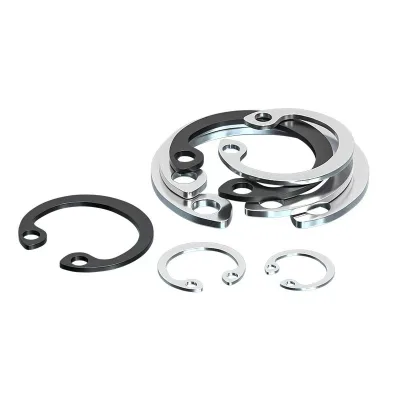
Sourcing carbon steel snap rings requires a disciplined approach to material verification and dimensional accuracy, as these components serve as critical retaining elements in mechanical assemblies. Buyers must distinguish between internal and external configurations, ensuring the selected ring matches the specific groove geometry and load-bearing requirements of the host application. The choice of carbon steel offers a balance of strength and cost-effectiveness, making it suitable for a wide range of industrial and automotive uses where high tensile strength is necessary without the premium cost of stainless steel.
Procurement teams should prioritize suppliers who demonstrate consistent manufacturing capabilities, particularly those offering OEM services and customization options. Since snap rings often function as hidden but vital safety components, their failure can lead to catastrophic assembly breakdowns. Therefore, verifying the supplier’s ability to maintain tight tolerances and provide consistent surface treatments is essential. This guide outlines the key technical, commercial, and quality assurance factors that buyers must evaluate to secure reliable supply chains for carbon steel snap rings.
Product Scope and Observed Listing Signals
The market for carbon steel snap rings presents a diverse range of product listings, with observed price points varying significantly based on material grade, surface treatment, and order volume. Buyers may encounter listings with minimum order quantities ranging from small trial batches to large industrial volumes, reflecting the flexibility of modern manufacturing facilities. It is crucial to analyze the listed specifications carefully, as some suppliers may offer standard off-the-shelf items while others specialize in custom-designed rings tailored to specific groove dimensions and load requirements.
Observed product attributes often include various surface treatments such as black oxide or self-finish with oil, which directly impact corrosion resistance and friction characteristics. Some listings highlight specific material standards, such as GB 4357-09 or equivalent international norms, providing a baseline for quality assurance. Buyers should note that while some products are described as non-customized, many suppliers accept OEM requests, allowing for tailored solutions that meet precise engineering drawings. Understanding these listing signals helps in filtering potential suppliers and aligning expectations with actual product capabilities.
Technical Specifications to Verify
Dimensional accuracy is paramount when specifying carbon steel snap rings, as even minor deviations can compromise the integrity of the assembly. Buyers must verify the tolerance grades, such as GB Standard Grade II or equivalent international classifications, to ensure the rings fit securely within their designated grooves. The wire diameter range is another critical parameter, with options typically spanning from very fine wires for delicate applications to thicker gauges for heavy-duty industrial machinery. Confirming the exact wire range and cross-sectional shape ensures that the selected snap ring can withstand the intended compression and tensile loads without permanent deformation.
Surface treatment and material composition also play vital roles in the performance and longevity of the snap ring. Carbon steel rings are often treated with black oxide or oil coatings to enhance corrosion resistance and reduce friction during installation. Buyers should verify the coating thickness and uniformity, as inconsistent treatments can lead to premature failure in harsh environments. Additionally, the winding direction and end type, such as closed and ground ends, must align with the assembly requirements to ensure proper seating and retention. Clear communication of these technical details with the supplier prevents mismatches and ensures optimal performance.
Compliance and Safety Documentation
Certification status is a primary indicator of a supplier’s commitment to quality management and consistent production standards. Buyers should request documentation for recognized certifications such as ISO 9001, which demonstrates a structured approach to quality control throughout the manufacturing process. Additional certifications like SGS, RoHS, CE, or TS16949 may be relevant depending on the end-use industry, particularly for automotive or consumer applications where regulatory compliance is strict. Verifying these credentials helps mitigate risks associated with substandard materials or inconsistent manufacturing practices.
Testing and inspection protocols are equally important for ensuring that delivered snap rings meet specified requirements. Buyers should inquire about the supplier’s testing methods, such as random sample inspections or AQL levels, to assess the rigor of their quality assurance processes. Documentation should include material certificates that confirm the carbon steel composition and mechanical properties, such as tensile strength and hardness. Ensuring that the supplier adheres to these standards provides confidence that the snap rings will perform reliably under operational conditions and meet all necessary safety and performance benchmarks.
Cost Drivers and Commercial Terms
Several factors influence the final cost of carbon steel snap rings, including material prices, surface treatment complexity, and order volume. Buyers should anticipate that custom specifications, such as unique wire diameters or specialized end types, may incur additional tooling or setup fees. Conversely, larger order volumes often result in economies of scale, reducing the per-unit cost significantly. Understanding these cost drivers allows procurement teams to negotiate more effectively and align budget expectations with the desired quality and quantity levels.
Commercial terms, including lead times and payment conditions, also impact the overall procurement strategy. Suppliers may offer varying delivery schedules, with some promising rapid turnaround times for standard items while requiring longer lead times for custom orders. Buyers should clarify these timelines to ensure they align with production schedules and avoid delays. Additionally, packaging methods, such as OPP bags within cartons or bulk packaging, can affect handling and storage costs. Clear agreement on these terms helps prevent unexpected expenses and ensures a smooth transaction process.
Supplier Qualification and Quality Control
Evaluating a supplier’s manufacturing capabilities is essential for ensuring consistent quality and reliable delivery of carbon steel snap rings. Buyers should assess the supplier’s production processes, including cold rolling and surface treatment techniques, to verify their ability to meet precise specifications. Suppliers with established OEM services and customization options often demonstrate greater flexibility and technical expertise, which can be advantageous for complex or specialized requirements. Visiting the facility or requesting detailed process documentation can provide valuable insights into their operational standards.
Quality control measures implemented by the supplier directly impact the reliability of the delivered products. Buyers should inquire about the supplier’s internal inspection protocols, including the use of automated checking equipment and manual verification steps. A robust quality control system should include regular audits of material batches and finished goods to detect any deviations early in the production process. Suppliers who maintain detailed records of their quality checks and are willing to share this information demonstrate a commitment to transparency and continuous improvement, reducing the risk of receiving defective components.
Long-Term Procurement Checks
Establishing a long-term partnership with a carbon steel snap ring supplier requires ongoing monitoring and periodic audits to ensure sustained quality and performance. Buyers should implement regular review cycles to assess supplier performance against key metrics such as defect rates, delivery timeliness, and responsiveness to issues. Continuous feedback loops help identify areas for improvement and foster a collaborative relationship that benefits both parties. Maintaining open communication channels ensures that any changes in specifications or requirements are promptly addressed and implemented.
Adapting to market changes and technological advancements is also crucial for long-term procurement success. Buyers should stay informed about emerging materials, surface treatments, and manufacturing techniques that could offer improved performance or cost savings. Periodic re-evaluation of supplier capabilities and market options ensures that the procurement strategy remains competitive and aligned with evolving business needs. By proactively managing these relationships and staying vigilant about quality and compliance, buyers can secure a reliable supply of carbon steel snap rings that support their operational goals.
FAQs
What material standards apply to carbon steel snap rings?
These rings typically follow GB 4357-09 or equivalent standards. Manufacturers also accept customized standards according to buyer requests. This ensures the product meets specific industrial requirements while maintaining structural integrity for compression load applications in various machinery.
Can I request custom winding directions for these rings?
Yes, winding direction is available as per your specific request. The product supports customization for various industrial and automotive needs. This flexibility allows buyers to tailor the mechanical properties of the snap ring to fit unique assembly constraints effectively.
What surface treatments are available for carbon steel rings?
Available treatments include black oxide or self-finish with oil coating. The coating thickness ranges from 8 to 10 micrometers for enhanced protection. These processes improve corrosion resistance and ensure the rings perform reliably in demanding industrial and automotive environments.
Which certifications do the manufacturers hold for production?
Manufacturers hold ISO9001, SGS, RoHS, CE, and TS16949 certifications. These credentials verify quality management systems and compliance with international safety standards. Buyers can trust that the production processes meet rigorous requirements for automotive and general industrial applications.
How is the delivery time determined for custom orders?
The standard delivery date is approximately 15 days for most orders. This timeline applies to customized production runs requiring specific specifications or packaging. Buyers should confirm exact lead times based on order volume and specific customization requirements before finalizing procurement.
What testing methods ensure quality for these snap rings?
Quality assurance involves random sample inspection to verify product consistency. The tolerance follows GB Standard Grade II or as per your requirement. This rigorous testing ensures the spring rate tolerance remains within plus or minus 3 to 10 percent for reliable performance.
Can I find suppliers offering factory OEM services?
Yes, factory OEM services are accepted for these carbon steel rings. Suppliers operate as direct manufacturers to provide customized solutions. This business mode allows buyers to obtain tailored products with specific dimensions, materials, and packaging directly from the production source.